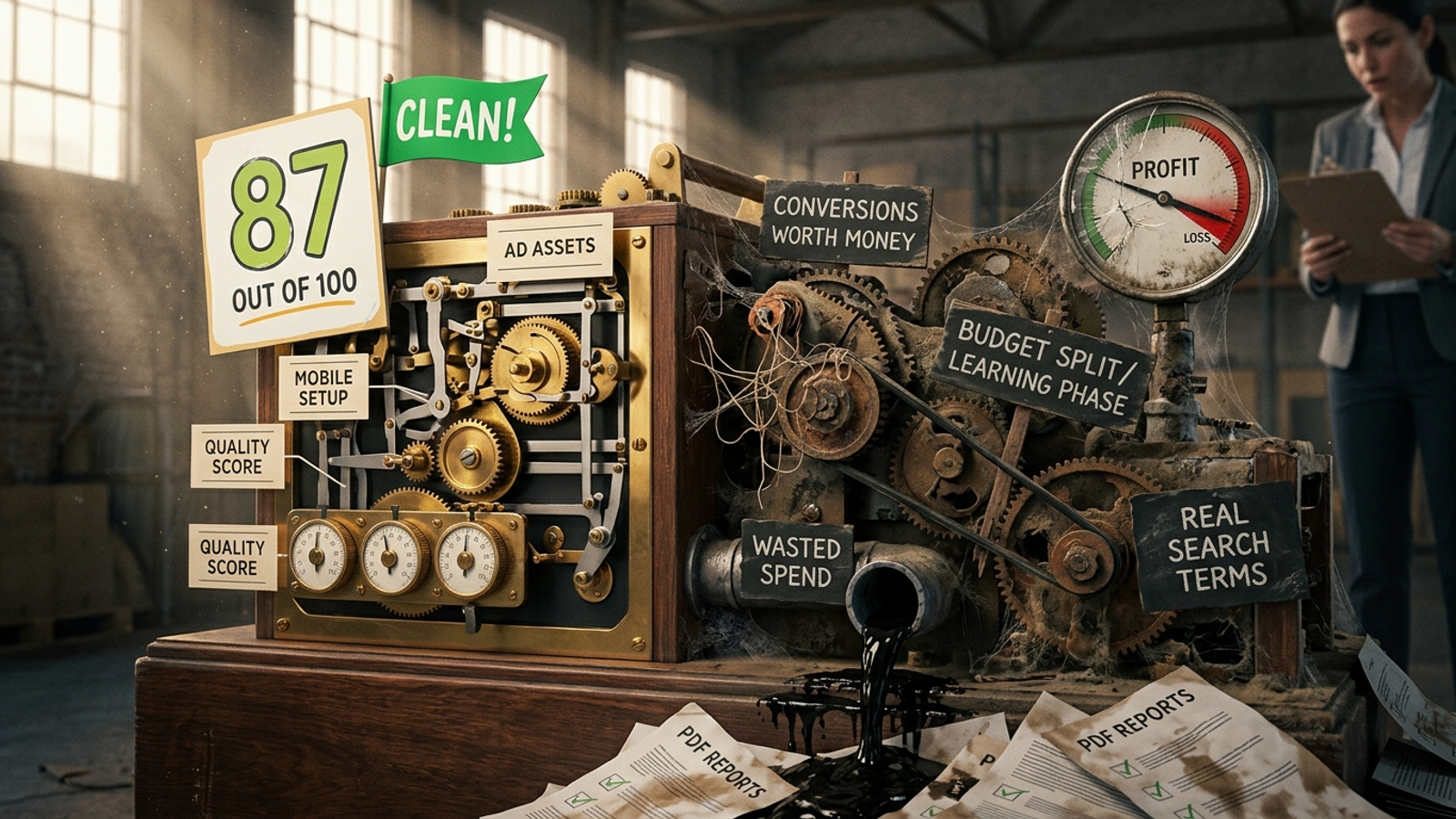
Most agencies will not tell you this: the automation tool is rarely the reason an account improved. I have audited accounts spending $20k a month that paid for an agency, a bid tool, and a reporting tool at the same time, while CPA still drifted up for three straight months. Each vendor pointed at the others. Nobody owned the result.
I used to tell clients the fix was better settings. I was wrong. The fix was choosing the right category of help before comparing logos, feature grids, and demos full of the phrase AI-powered.
Most buyers compare brand names when they should compare how much work they still have to do after they buy. This guide sorts PPC automation into three buckets, then uses four questions to match the right one to your account.
The real problem: every tool promises the same outcome
Search for PPC automation and you get 40 logos promising AI bidding, smarter budgets, and better ROAS. I have sat through those demos. Under the identical language sit completely different products, and they leave you with completely different workloads.
One tool pauses a keyword only after you write the rule. Another suggests 27 changes on Tuesday that you still have to approve. A third changes the bid at 2am, records the reason, and keeps moving.
The confusion is deliberate in one sense and accidental in another. Vendors like vague words such as AI-powered because specifics invite comparison. Google also has its own automation inside the account: Smart Bidding, Performance Max, broad match. Buyers then stack vendor automation on top of Google automation without knowing which layer moved CPA.
After a decade of this, my rule is simple: ignore the feature list and ask who does the work after you pay.
The three PPC automation categories that matter
Strip away the logos and every PPC automation product I have touched falls into one of three buckets. The bucket matters more than the brand because it determines your weekly workload after purchase.
Get the bucket wrong and you pay for automation while still doing the job you meant to automate.
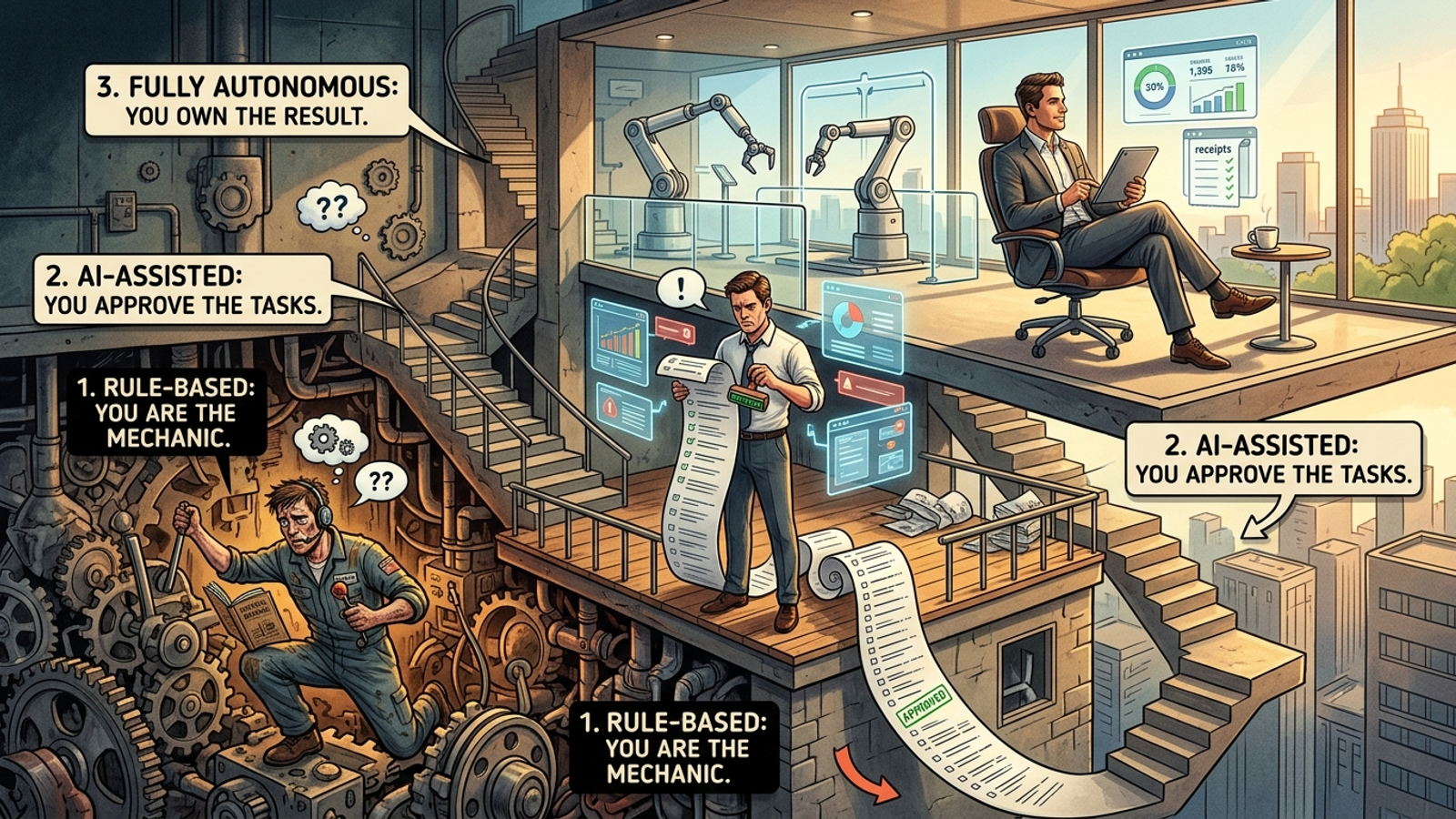
1. Rule-based tools: you write the logic
These are scripts, rules engines, and old-school bid tools. Their mechanism is simple:
- You define a condition.
- You set a threshold.
- You choose an action.
- The tool follows it.
If CPA goes above $80 for three days, pause the keyword. If a search term contains “free,” add it as a negative. Nothing happens until you tell it exactly when and how to act.
That makes rule-based tools predictable and often cheap. It also makes them a second job. I once maintained 60-odd rules across four ecommerce accounts. They fired correctly. They still needed constant pruning because thresholds that made sense in December were garbage by February.
Pick rules when you have time and skill but no budget, not when you need hours back.
2. AI-assisted platforms: they recommend, you decide
These are the Optimizer Score dashboards, audit tools, and what the deck calls “AI insights” that turn out to be a to-do list.
The platform scans the account, flags wasted spend or weak ad strength, then waits for you to approve, edit, or push the change. It can be useful. It is not hands-off.
I ran one across a home services account last year. It surfaced 30-plus suggestions a week. About half were solid. The problem was me: I had four other accounts and approved maybe a third of them, usually on Fridays. CPA moved 4% in a month, which is noise.
A recommendation only matters when someone has the context and time to act on it. This is where many buyers get caught. They buy a platform to remove work, then inherit a cleaner-looking version of the same work.
Buy assistance when you have the hours to work the list, not when the list is the problem.
3. Fully autonomous systems: they execute inside guardrails
This is a different job description. The system does not email you that bids should change. It changes them. It moves budget, adds negatives, tests copy, and logs what it did and why.
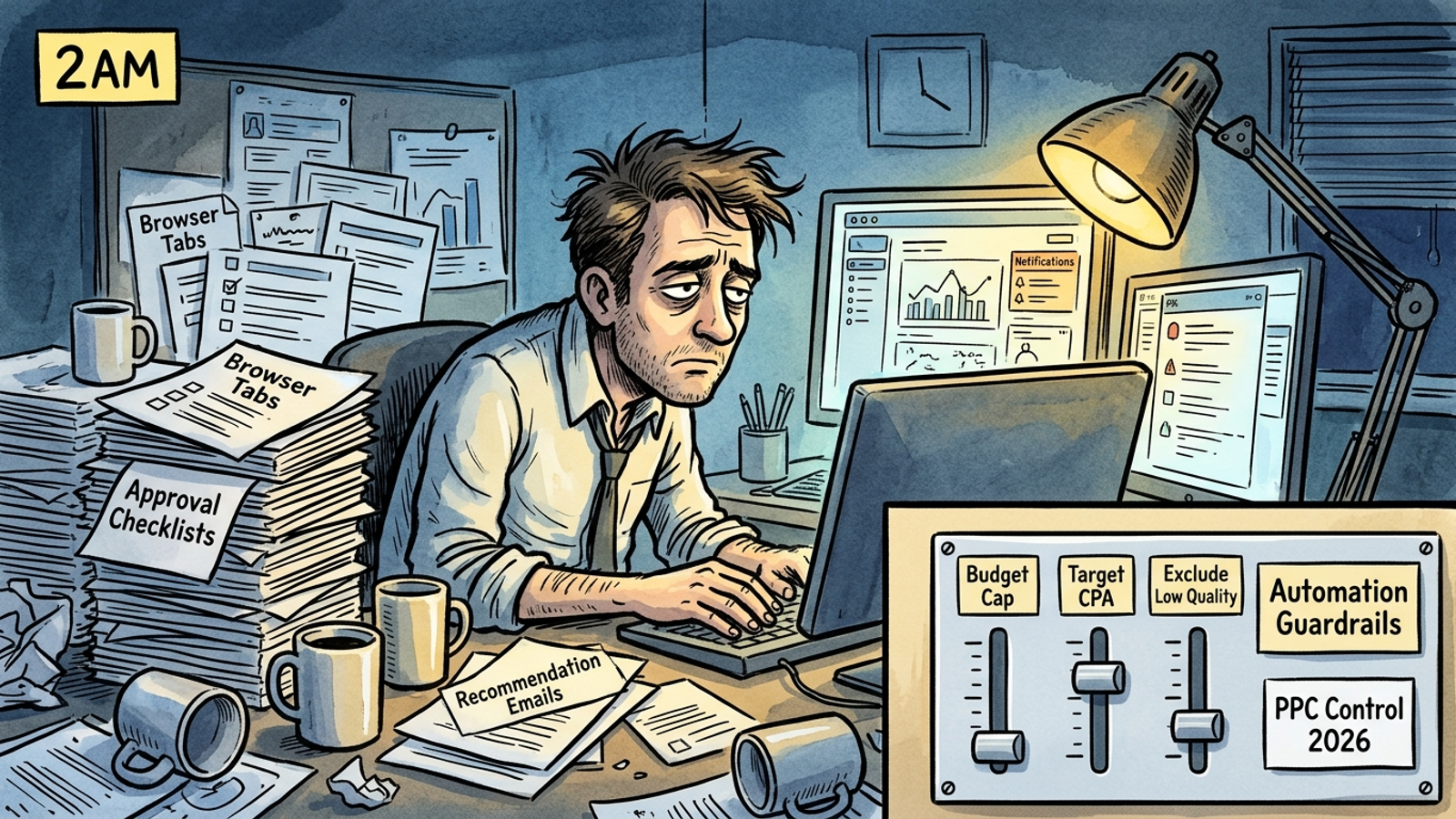
You set the budget, CPA target, and the pages it can touch. The system stays inside those lines and works while you sleep.
That is how groas runs paid search: hundreds of specialized models execute every action a marketing team would, around the clock, while a named account manager owns direction and guardrails.
I prefer this category for one boring reason: cause comes before effect. Continuous execution creates faster learning cycles. Faster learning cycles are what can cut CPA by 27% in three weeks instead of 4% in a quarter.
Buy autonomy when execution speed is the bottleneck, not ideas.
Four questions that sort the right tool fast
I stopped giving clients comparison spreadsheets years ago. They compare the wrong things: logos, feature checkmarks, starting prices. The sheet looks thorough and tells you nothing about Tuesdays.
Instead, answer four questions about workload, cost, control, and your team. The right category becomes obvious once you measure the operating burden, not the sales pitch.
1. How hands-off do you actually want to be?
This question kills most bad purchases.
Say you spend two hours a week in the account now:
- A rule-based tool usually keeps you at two hours, sometimes three, because you write and maintain every rule.
- An AI-assisted platform may cut review time but adds approval time. Call it 90 minutes of clicking through suggestions.
- An autonomous system can take the work near zero, but only inside the guardrails you set.
I ask clients to write down a number: how many hours per month should PPC cost you? If the answer is under two, stop looking at dashboards that require you to live in them.
Match the tool to the hours you want, not the hours you have.
2. What will it cost at your future spend, and what does it cover?
Sticker price lies. Many rule-based and recommendation tools scale with spend, so the bill rises while the features stay largely identical. Current public pricing puts Optmyzr from $208+/mo for agency automation and Adalysis from $149+/mo for ad testing.
Now project forward. Say you grow from $10k to $80k a month. The tool may not get smarter, but you can pay two or three times more for the permission to keep clicking approve.
Then check coverage. Some tools are Google-only. That is fine until your paid search operation expands and you realize you bought automation for only part of the work. Fragmented coverage creates fragmented learning, which slows improvement.
Price the tool at your spend 12 months from now, not today, and confirm it covers the channels you pay for.
3. How much transparency and control do you actually get?
Buyers hear control and picture a dashboard. I picture an audit trail.
Rule tools are transparent because you wrote the rule, but they cannot tell you what you missed. Recommendation tools show projected impact, then leave the decision and the blame with you. Autonomous systems flip the model: they act, then they need to show receipts.
That means a timestamped record of:
- bid shifts
- budget moves
- negative keywords
- tests launched
- the reason for each action
- what happened next
That is the test I use now. If a vendor cannot show a timestamped list of what changed, why it changed, and what followed, I do not care how pretty the score is.
For a deeper look at execution-level transparency, this buyer’s guide to AI Google Ads tools breaks down recommendation engines versus systems that actually do the work.
Demand a log of actions, not a list of suggestions.
4. Do you have someone who can stay in the loop?
Rule tools assume you understand match types, attribution lag, and when a Smart Bidding learning period is just noise. AI-assisted tools assume a little less skill, but they still need someone who can identify a good suggestion versus a volume-killer.
I learned this on a SaaS account that changed its offer every quarter. The recommendation engine kept pushing broader keywords that looked efficient on form fills and poisoned SQLs downstream. The tool was not wrong about clicks. It simply did not know what a qualified pipeline was.
An autonomous setup has to carry that business context: the offer, margins, and what counts as revenue. groas calls it Universal Context, and whether you buy groas or not, that is the question to ask: who teaches the system what a good customer is worth?
If the answer is nobody, you will optimize toward cheap conversions and wonder why revenue stalls.
If no one on your team can veto a bad suggestion, do not buy a tool that needs vetoes.
Quick comparison: where each category fits
I compare specific products in this ranking of Google Ads automation tools by autonomy level. For a fast sort, use this table.
Find your row, then stop shopping in the other columns.
| Your situation |
Rule-based tools |
AI-assisted platforms |
Fully autonomous systems |
| Weekly hours you can give PPC |
3+ hours; you like control |
1–2 hours for approvals |
Near zero, inside guardrails |
| Monthly spend |
Under $5k; simple structure |
$5k–$25k; one channel |
$10k+; multi-campaign or multi-channel |
| Team skill |
You can write and maintain logic |
You can judge suggestions |
You set targets; the system executes |
| Best for |
Freelancer with time; tiny catalog |
In-house marketer who wants a second pair of eyes |
Business or agency that needs execution, not advice |
Two expensive ways buyers get this wrong
Mistake 1: stacking automation on automation
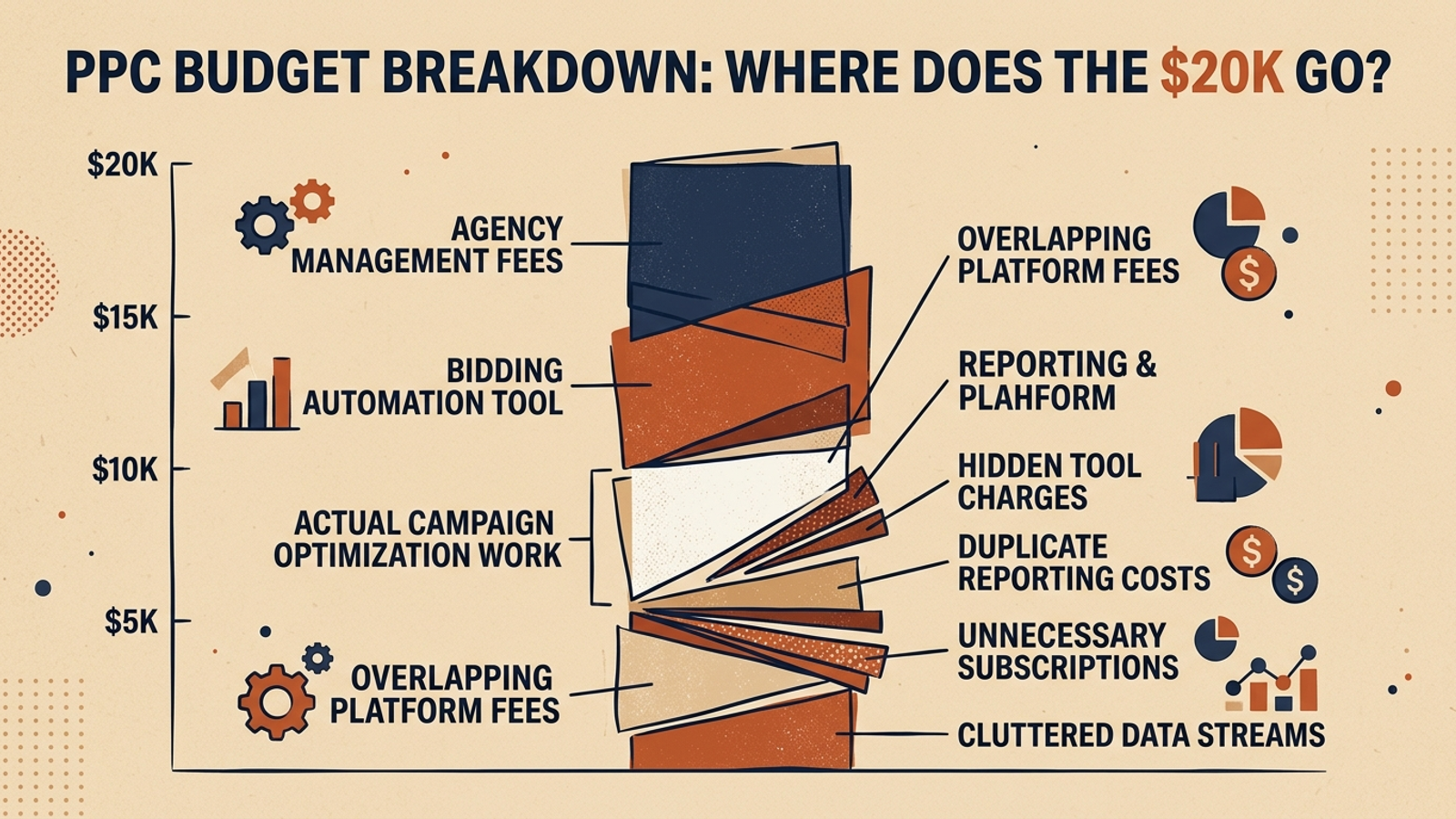
I have seen a $20k-a-month account paying a $4,000 agency retainer plus two software seats, close to $450 a month, while all three claimed to manage bids.
The mechanism is ugly:
- Google’s Smart Bidding changes a bid.
- The bid tool changes it back.
- The agency pauses the keyword on Friday because performance looks volatile.
Three drivers, one wheel.
If two vendors both claim to set the same bid, one of them is decoration. Pick a single owner for each decision and make the other tools read-only.
Mistake 2: buying speed for the wrong goal
A tool that tests 500 ad variants quickly is worthless if it optimizes toward form fills while your sales team needs closed-won revenue.
I used to swear by broad match plus Smart Bidding for a SaaS client. It cut cost per lead 22% in a month. Pipeline fell 15% the next quarter because the cheap leads never closed.
The algorithm learned exactly what I paid it to learn. Nothing mysterious happened. I optimized the wrong event efficiently.
Confirm what conversion the system learns from before you ask how fast it learns.
Match the system to the job you need done
Say you run a Shopify store at $8k a month with one marketer who also writes emails. You do not need a second to-do list. You need negatives added, feed labels fixed, and budgets shifted without a Friday approval session. That is autonomy territory.
Say you run home services at $25k across five metros with an in-house lead who knows the account. An assisted platform can work if that person truly keeps two hours a week for approvals.
Say you run SaaS or an agency with 15 accounts and no one to babysit bids. Rules will drown you.
This will not work for everyone. Skip autonomy if you change budgets daily by gut feel or will not share CRM data. Stay with manual control until you fix that operating problem first.
Match the tool to who owns revenue after the click, not who owns the logins.
I moved from spreadsheets to autonomous execution because the math stopped defending the old model. Paying $4,000 a month for weekly check-ins plus $300 for software that still needs me means I bought the same hours twice.
Groas runs the other way: the machine handles bids, budgets, negatives, and testing continuously inside limits I set, while a named strategist answers for CPA and pipeline. If you want hands-off work with receipts, apply for the free trial and watch the action log for two weeks.
If the log does not teach you something your last report missed, keep your current stack.